

How to Wear a Monochrome All-Black or All-Navy Suit | A SUITBAE Guide
How to Wear a Monochrome All-Black or All-Navy Suit | A SUITBAE Guide
A head-to-toe black or navy suit, shirt and tie can look exceptionally sharp — provided the outfit has enough depth to frame your face. The trick is not to make every piece identical. Work with subtle differences in shade, texture and finish so the look feels considered rather than flat.
Whether you prefer the quiet confidence of navy or the impact of black, this guide explains how to build a monochrome outfit, choose the right shirt and tie, and avoid losing your features against a wall of dark colour. We’ll put the principles into practice with three SUITBAE styles: Lawrence Navy, Diablo Black and Majid Black Textured.

What Does Monochrome Tailoring Really Mean?
Monochrome dressing uses one colour family from head to toe. For suiting, that could mean a navy jacket, navy shirt and navy tie, or a black suit with a black shirt and black tie. It is a tonal approach, not a rule that every item must be exactly the same shade.
In fact, slight variation is what makes the outfit work. A matte shirt against a softly textured suit, or a tie that is a shade deeper than the shirt, creates separation without breaking the colour story. Think of it as building layers of the same colour rather than wearing one uninterrupted block.
The Key: Create Contrast Near Your Face
The biggest risk with an all-dark outfit is that the shirt, tie and jacket merge into one dark area. When that happens, the collar, knot and outline of your face can lose definition — particularly in low light or photographs.
You do not have to abandon the monochrome idea to avoid this. Use small changes in tone and finish around the neckline. A shirt that is a touch lighter than the tie, a tie with a subtle woven texture, or a clean collar edge can create just enough separation.
- Use a tonal step: try a mid-navy shirt with a deeper navy tie, or a charcoal-black shirt with a true black tie.
- Separate the finishes: combine a low-sheen shirt with a slightly lustrous tie, or a textured suit with a smoother shirt.
- Keep the collar crisp: a collar that sits neatly around the neck gives the tie a defined frame.
- Check the knot: make sure it fills the collar opening without looking oversized or loose.
How to Avoid Washing Out Your Features
“Washing out” is not simply about having a fair or deep complexion. It is about how the darkness, contrast and finish of the outfit sit alongside your own colouring — and how the lighting changes that relationship. A monochrome look should frame your face, not compete with it.
Start by checking the outfit in natural daylight as well as indoor lighting. If your face seems to disappear against the dark shirt, introduce a little more separation at the collar: a slightly lighter navy, a softer charcoal, or a subtle change in fabric texture. If the shirt feels too stark against your skin, try a softer black or a blue-black tone rather than a very glossy, inky finish.
Pay attention to the shirt collar and tie knot in particular. They sit closest to your face, so even a small tonal difference can make the whole outfit look more defined. Grooming, a well-fitted collar and good lighting also help your features remain the focus.
All-Navy: Make the Tones Work Together
Navy is an especially easy colour family for tonal dressing because it naturally comes in a wide range of depths — from softer, lighter navy through to midnight. A navy suit with a navy shirt and tie can look refined when the three pieces are not identical in shade or finish.
For a clean result, let the suit provide the structure, choose a shirt with a slightly different depth, and use the tie to anchor the centre of the outfit. A textured tie can add interest without introducing another colour. If you want a small accent, keep it discreet: a pocket square or cuff detail should support the look rather than become its focal point.
All-Black: Build Depth, Not Shine
Black-on-black can be powerful, but it is less forgiving when every surface reflects light in the same way. The simplest way to keep it sophisticated is to vary the texture. Pair a smooth shirt with a textured suit, or use a tie with a subtle weave rather than a highly reflective finish.
Be deliberate about shine. Too many glossy surfaces can look costume-like under flash, while a completely flat combination can lose its shape in dim settings. A controlled mix of matte and gentle sheen gives the outfit dimension. Keep shoes and belt polished but understated, and avoid adding several competing statement accessories.
Fit, Collar and Proportion Still Matter
Monochrome styling makes the outline of the suit more noticeable, so fit is essential. The shoulder seam should sit neatly, the jacket should fasten without pulling, and the trouser line should look clean. A shirt that bunches beneath the jacket or a collar that gaps will interrupt an otherwise seamless outfit.
- Jacket: check the shoulder line and make sure the front lies smoothly when fastened.
- Shirt: the collar should close comfortably and hold its shape beneath the jacket.
- Tie: choose a width that sits in proportion with the lapels and a knot that suits the collar.
- Trousers: aim for a clean break and avoid excess fabric pooling around the shoes.
- Accessories: keep metals, pocket square and footwear restrained so the tonal palette stays in control.
Three SUITBAE Suits for a Monochrome Look
These three SUITBAE options give you different ways to approach dark tonal dressing: a versatile navy base, a classic black three-piece and a more tactile black design with velvet detailing.


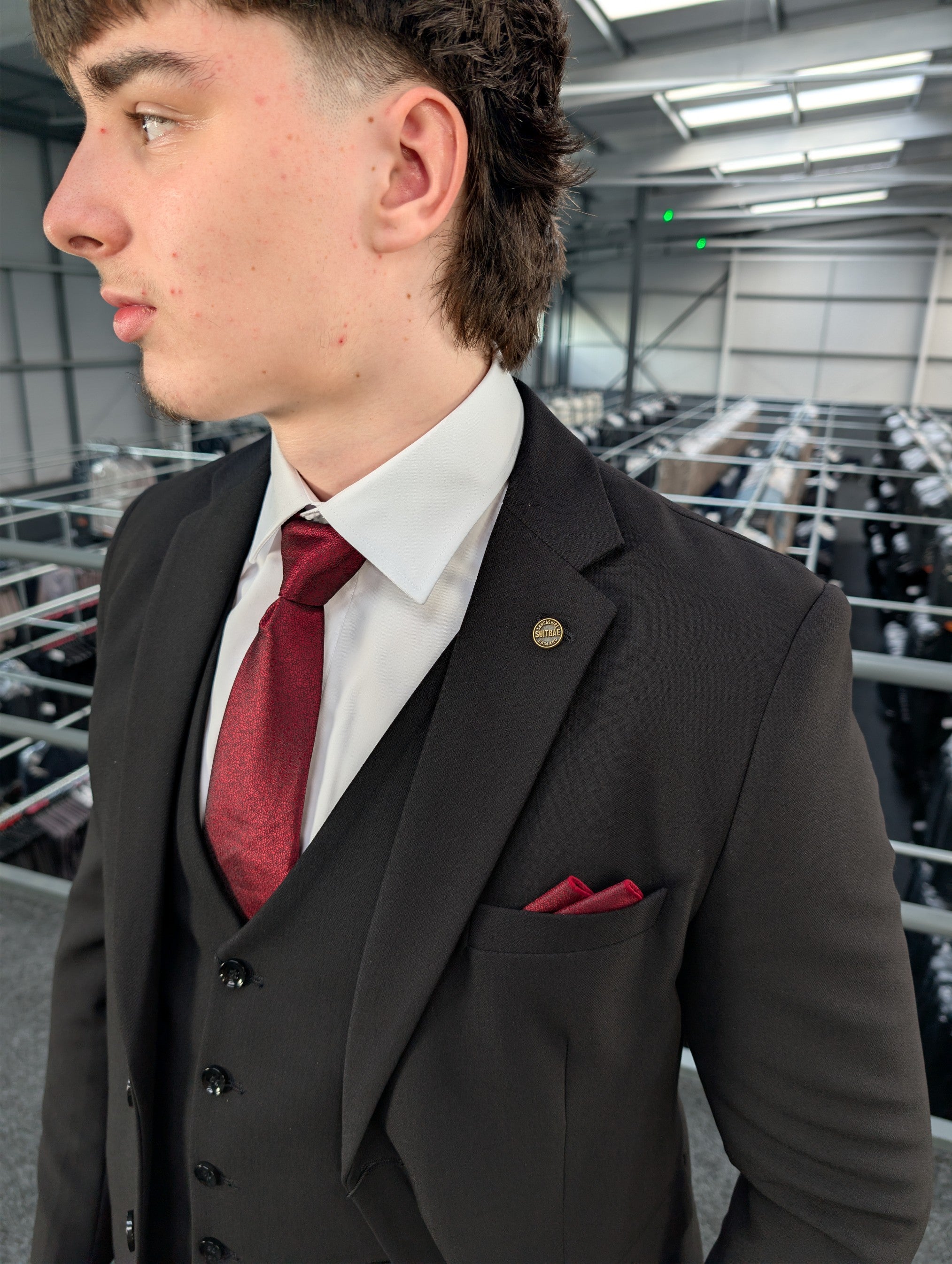



A Monochrome Suit Checklist
Before you head out, check the outfit in more than one type of light. The aim is a clean tonal line with enough detail around the face to keep the whole look defined.
- Keep the suit, shirt and tie in the same colour family, but avoid making every shade and finish identical.
- Use a small tonal difference between shirt and tie to define the collar area.
- Mix matte, smooth and textured surfaces to add depth without adding colour.
- Make sure the collar sits neatly and the tie knot fills the opening.
- Check the outfit in daylight and indoor lighting, especially before photographs.
- Keep shoes, belt, watch and pocket square understated and coordinated.
- Check the suit fit while standing and sitting so the silhouette stays clean.
Explore SUITBAE’s three-piece suits and tuxedo suits to find the right base for your monochrome look.
Final Thoughts
Monochrome tailoring is at its best when it looks effortless. Choose a suit that fits properly, then create subtle separation with the shirt, tie and fabric finishes. Navy gives you a softer, versatile route into tonal dressing; black brings a sharper, more dramatic finish.
And remember: the goal is not to disappear into one dark silhouette. A little contrast at the collar, thoughtful texture and a well-defined fit will keep the focus where it belongs — on you.
Monochrome Suit FAQs
Can you wear a black suit, black shirt and black tie together?
Yes. The combination can look sharp and intentional. Use subtle differences in texture or finish so the shirt, tie and jacket do not merge into one flat surface. A neat collar and well-proportioned tie knot help frame your face.
How do you wear an all-navy suit, shirt and tie?
Keep all three pieces in the navy family but vary the depth or texture. For example, a slightly lighter navy shirt with a deeper tie gives the neckline definition while keeping the outfit monochrome.
Will an all-black outfit wash out my features?
It can happen if the dark shirt and tie blend together or the outfit creates too little definition around your face. Check the look in natural and indoor light, and introduce a small tonal or textural difference near the collar if needed. The effect depends on the individual and the lighting, not just skin tone.
Should the shirt be lighter or darker than the tie?
Either can work. A shirt that is slightly lighter than the tie often makes the knot stand out clearly, while a darker shirt with a subtly lighter tie can also create definition. The important thing is that the two pieces remain distinguishable.
Can you mix different black fabrics in one outfit?
Absolutely. Texture is one of the easiest ways to add depth to an all-black look. Try a smooth shirt with a textured suit, or a tie with a subtle weave. Keep shine controlled so the outfit looks refined rather than overly glossy.
What shoes should you wear with a monochrome suit?
Black leather shoes are the most straightforward choice with an all-black outfit. With navy, black shoes create a formal finish, while dark brown can soften the look. Keep the shoe style appropriate to the occasion and the formality of the suit.